Discover how AWS Visual Asset Management System (VAMS) orchestrates 3D assets from design tools to...
Alive Home 360 faced a challenge that most home builders consider impossible: let customers tour properties, customize every design element, and get instant pricing quotes entirely online, without requiring app downloads or high-end hardware. The pilot platform proved that Unreal Engine 5 could power a complete business solution: photorealistic rendering, variant and option management, live pricing systems, secure user configuration management, social sharing, and brochure generation. This kind of advanced development contributed to 4D Pipeline's recognition as an Unreal Engine Silver Partner for 2025.
"What sets 4D Pipeline apart as a partner is their understanding of our business needs beyond just the visuals. They built the Alive Home 360 platform, which leverages Unreal Engine 5 to generate photorealistic digital twins of homes, allowing buyers to tour and experience their future house, make design and layout choices, and see exactly how much each decision costs in real-time."
- Rod Recker, Head of Product, Alive Home 360
Validating the Technology at Scale
For Alive Home 360, the goal was clear: prove that an online home buying experience could rival and extend walking through a physical model home. The project's scope went beyond creating impressive demos. The pilot platform needed to validate that the technology could handle the full complexity of residential real estate sales: the ability to tour and view key elements of the home in context, variant and option management across dozens of floor plans, coordinated material updates across connected rooms, secure user configuration management, and seamless integration with existing sales and ERP systems.
The Technical Challenge
The technical requirements were substantial. The platform needed to provide 200+ high-fidelity homes simultaneously for streaming, handle complete changes of room layouts and structural variants in real-time, coordinate option and material changes across multiple rooms, generate full renders automatically for brochure features, and maintain photorealistic quality throughout. All of this while providing sub-second response times and enterprise-grade security for integration with the home builder's ERP backend for pricing and user information.
Building a Complete Business Platform
4D Pipeline's approach combined Unreal Engine 5's cutting-edge rendering technology with production-ready infrastructure. The platform was built to serve two distinct user groups: home buyers exploring options online and Home Consultants guiding customers through the sales process.
The core stack leveraged UE5's Nanite virtualized geometry, Lumen global illumination, and hardware ray tracing for photorealistic quality, then wrapped it in custom Pixel Streaming architecture for cross-platform deployment, NodeJS backend for data and business logic, and a responsive React web interface that tied everything together. A key differentiator was the optimized and user-tested UI/UX, designed with both user groups in mind and built to scale seamlessly from desktop browsers down to mobile devices.
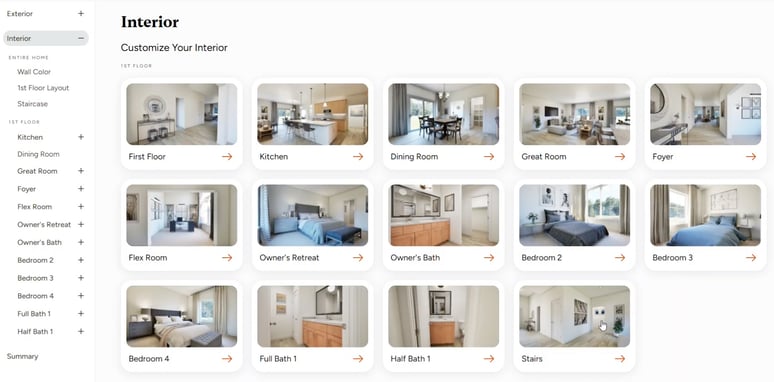
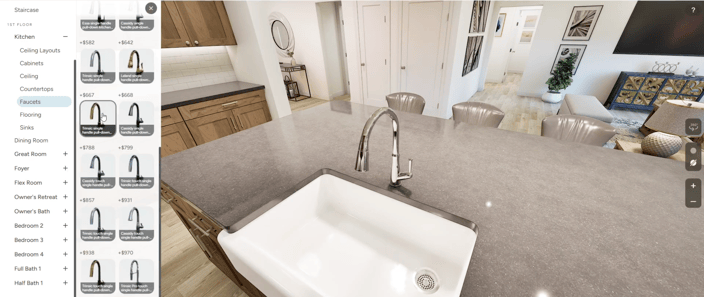
The groundbreaking element was the deep integration between Unreal Engine and business systems. The team connected the ERP and home builder pricing logic directly to 3D model changes. When customers select different flooring materials, upgrade countertops and faucets, or choose layout variants, pricing updates instantly, calculated on a per-variant and room-size basis. Pricing was also adjusted based on the region where the home was located. This required tight coordination between UE5's rendering layer and Alive Home 360's financial systems, ensuring every customization option reflects real costs, availability, and dependencies.
For floor plan variants, the platform leveraged Unreal Engine 5's Variant Manager system to handle complete architectural transformations. Rather than simple material swaps, customers switch between two-bedroom and three-bedroom configurations, add office spaces, or modify kitchen layouts, with entire rooms appearing, disappearing, and reconfiguring seamlessly. The complexity of coordinating these changes while maintaining photorealistic quality and sub-second response times required custom tooling built on top of UE5's capabilities.
Navigation presented another technical challenge. The vision was to create a guided tour through the home, with orchestrated and pre-defined hotspots that highlight specific key options or room setups. The team built a custom hotspot system with art-directed camera paths that dynamically adapt to different floor plan variants. Much of the tooling was created to allow this to be artist-defined, giving content creators control over the viewing experience. As layouts change, the navigation system recalculates optimal viewing positions and transition paths, maintaining professional presentation quality regardless of customer choices.
Validating the Business Model
The completed pilot platform successfully demonstrated that digital twin technology could transform residential sales operations. In many cases, physical model homes don't even exist, so the platform enables customers to virtually visit and design their home for the first time. The platform's ability to save and load their custom home configuration demonstrated that buyers could return to configurations, share them with family members, and refine choices over time.
For home builders evaluating this approach, the pilot validated measurable advantages: dramatically reduced model home costs, streamlined sales cycles, and improved customer confidence through accurate visualization. The data integration with sales and ERP systems demonstrated unprecedented visibility into customer preferences and decision-making patterns. When material options changed or pricing adjusted, updates flowed automatically through the system without manual intervention, validating the long-term maintainability of the digital twin approach.
Production-Ready Security and Scale
Beyond visual quality and business logic, Alive Home 360 required enterprise-grade reliability. The platform processes real financial transactions, stores customer configurations, and handles sensitive business data. 4D Pipeline implemented SSL encryption throughout, built redundant streaming infrastructure on reliable cloud platforms using Infrastructure as Code, and created custom Unreal Engine tooling that streamlined content creation without sacrificing security.
The custom UE5 plugin developed for the project represented another technical milestone. Rather than forcing artists to work within standard Unreal workflows designed for games, the plugin optimized content creation specifically for architectural configurators. Artists can efficiently produce and update the high-fidelity homes the platform demands, maintaining visual consistency across the entire portfolio while managing the complexity of variant systems and material dependencies.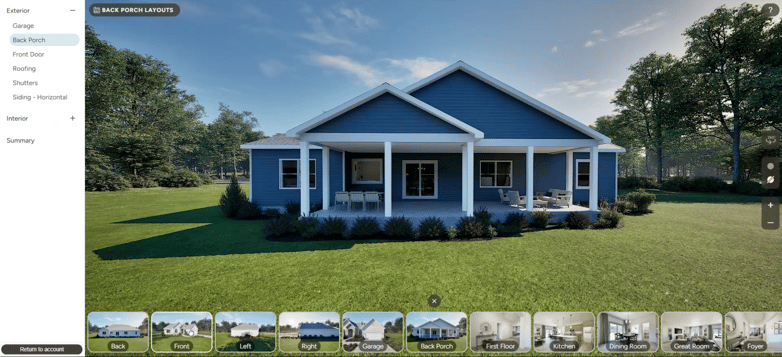
Cross-platform deployment pushed Pixel Streaming technology further than typical implementations. The same photorealistic experience runs on desktop browsers, mobile phones, and tablets without separate apps or degraded quality. The platform manages 200+ complete homes through streaming infrastructure, each with dozens of customization options and variant combinations, while maintaining smooth, responsive experiences for end users regardless of their device capabilities.
What the Pilot Platform Proved
The Alive Home 360 pilot platform successfully demonstrated complete integration between photorealistic rendering, real-time business logic, pricing systems, and secure user configuration management at production scale. While the platform remains internal to Alive Home 360 for now, the technical validation was comprehensive and represents the kind of Unreal Engine 5 work that contributed to 4D Pipeline's recognition as an Unreal Engine Silver Partner.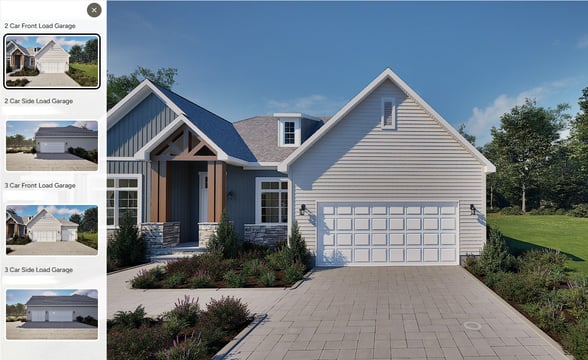
The residential real estate industry continues moving toward digital-first customer experiences. For builders evaluating when to implement digital twin technology, this project answered the critical technical questions and proved the approach is ready for deployment.
How 4D Pipeline Can Help
As an Unreal Engine Silver Partner, 4D Pipeline specializes in pushing UE5 into new applications and industries. Our work with Alive Home 360 demonstrates our approach: combining cutting-edge rendering technology with production-ready infrastructure, building deep integrations between visual experiences and business logic, and creating custom tooling that extends Unreal Engine's capabilities for specific industry requirements.
Whether you're exploring digital twin applications for real estate, retail, industrial facilities, or architectural visualization, we bring hands-on Unreal Engine expertise that translates technical capabilities into solutions that drive measurable business results. From feasibility studies through production deployment, we help you navigate the complexity of real-time 3D technology and deliver platforms your customers and stakeholders actually use.
You can see examples of our Unreal Engine work across automotive, fashion, industrial, and AEC clients in our project portfolio.
Watch our Alive Home 360 video
Already have a project in mind? Click here to schedule a consultation